The quick answer
Is the Giza sound and light show worth it, given its reviews?
Worth it for a particular kind of traveller: someone who wants the pyramids and the Sphinx floodlit at night and accepts an old-fashioned show with no actors. This listing scores 2.8 from about 51 reviews, and the other Giza sound and light listings on the same site sat between 2.9 and 3.2 when checked. The low marks belong to the show format as much as to this seller.
Five things to weigh
What the page sells
A private outing: transfers in an air-conditioned vehicle, entry fees, a tour guide and a bottle of water, around two hours in all. A separate direct entry ticket is delivered to the traveller. The page does not publish a script, a running order or a start time.
What reviewers criticise
Write-ups on travel sites tend to call the production dated, with narration they find generic and sound that falls short of modern shows. One practical review also mentions cancelled bookings and a driver who did not appear. Read the newest reviews of this listing for the same themes.
What reviewers enjoy
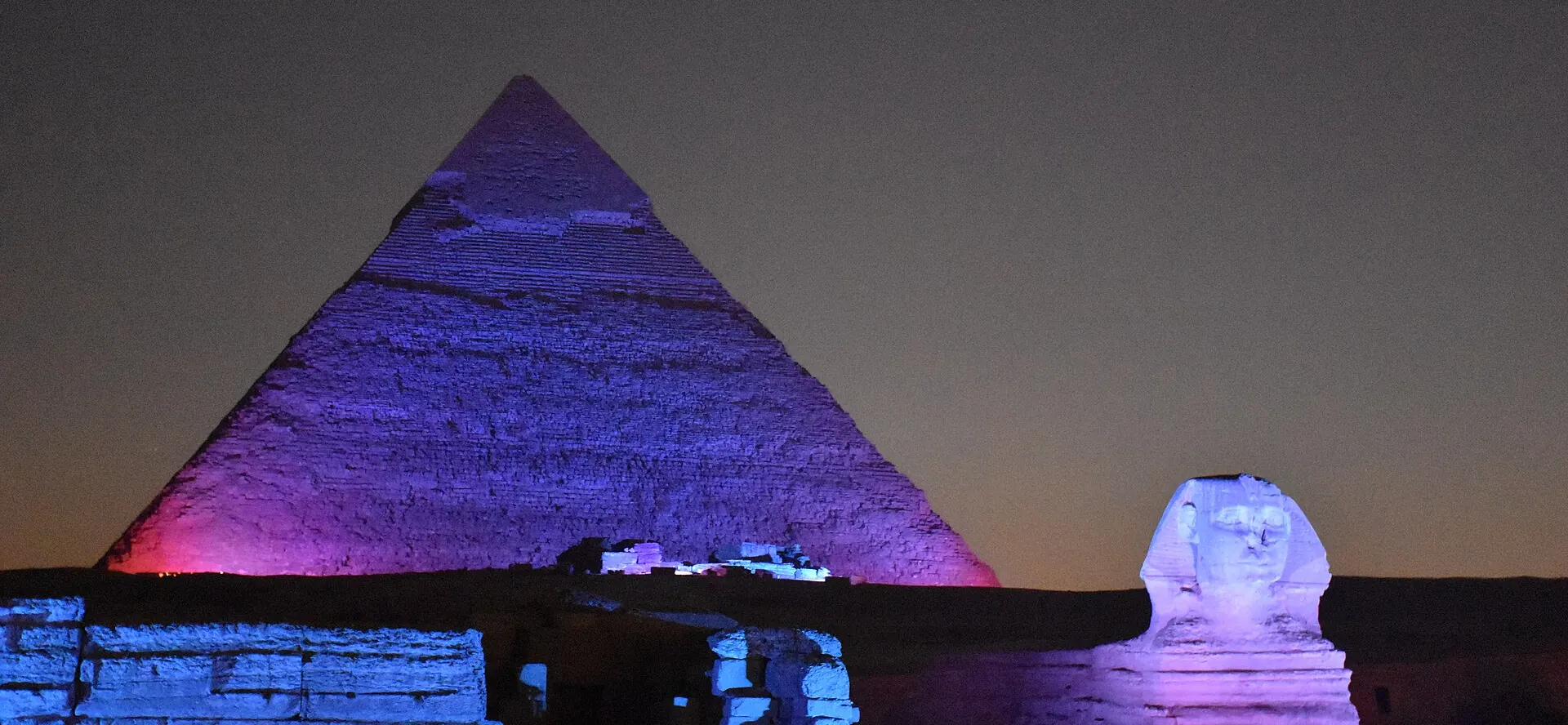
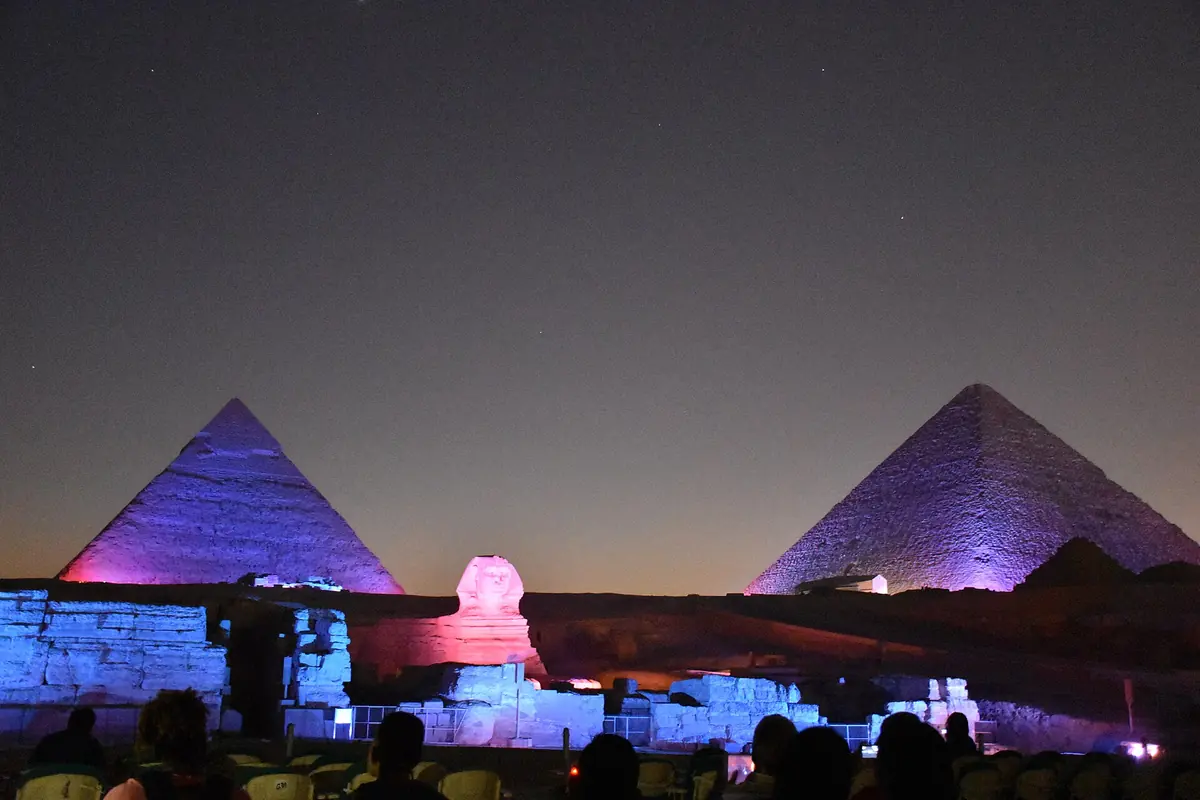
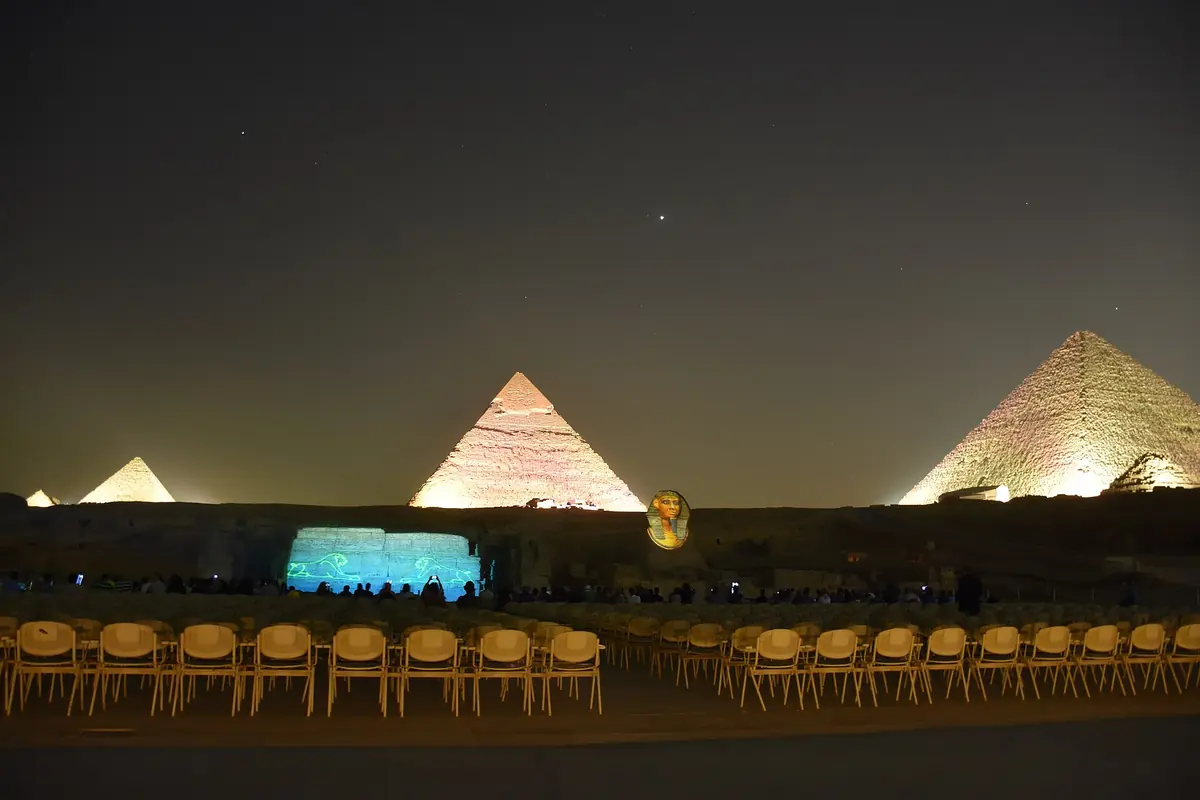
The same write-ups praise the setting: three pyramids and the Sphinx lit in colour against a night sky, with narration that covers ancient Egyptian history. A private outing also avoids the crowds that large group tours bring.
Plan for the open air
Seats stand outdoors on a desert plateau, so bring a layer you can add or remove and shoes that cope with sand and gravel. Narration languages change from night to night, so check yours before you pay.
The stage and its story
Seven pieces of the plateau behind the lights
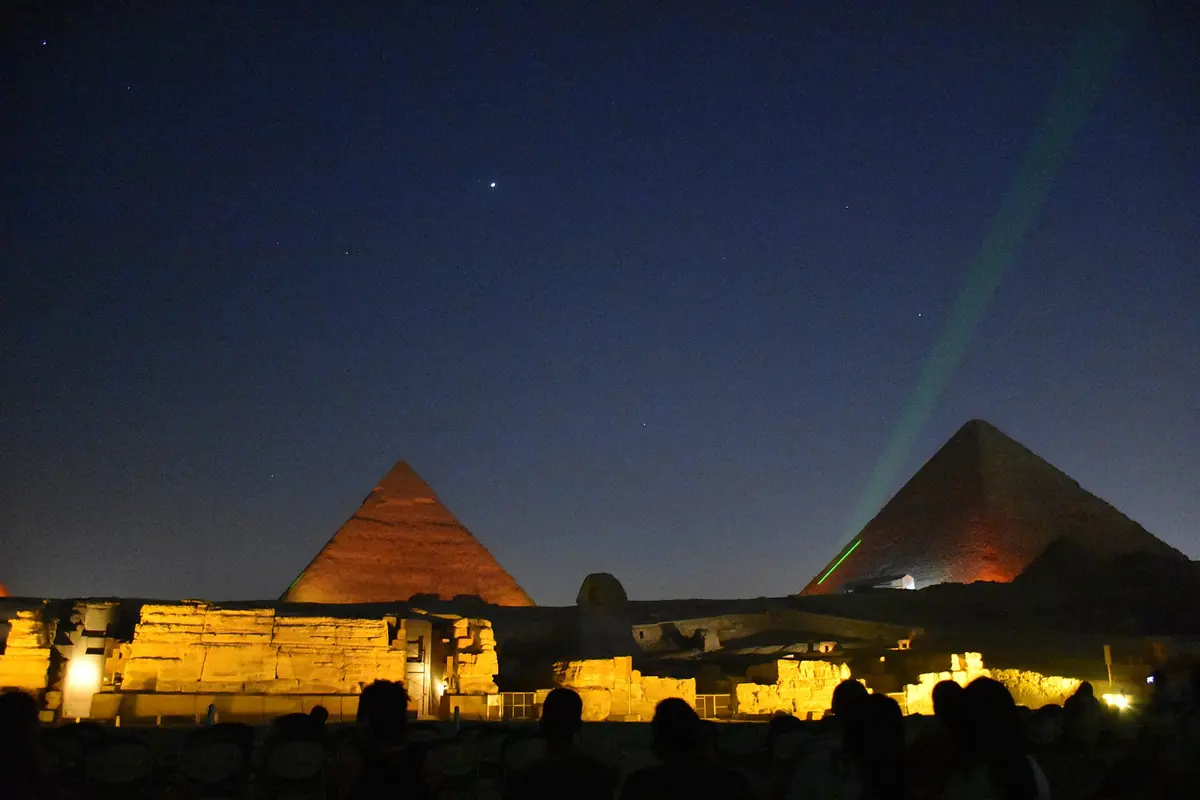
A sound and light show works with what the site already holds. These seven panels set out the format, the date and the stones the colours fall on, each from a named source.
-
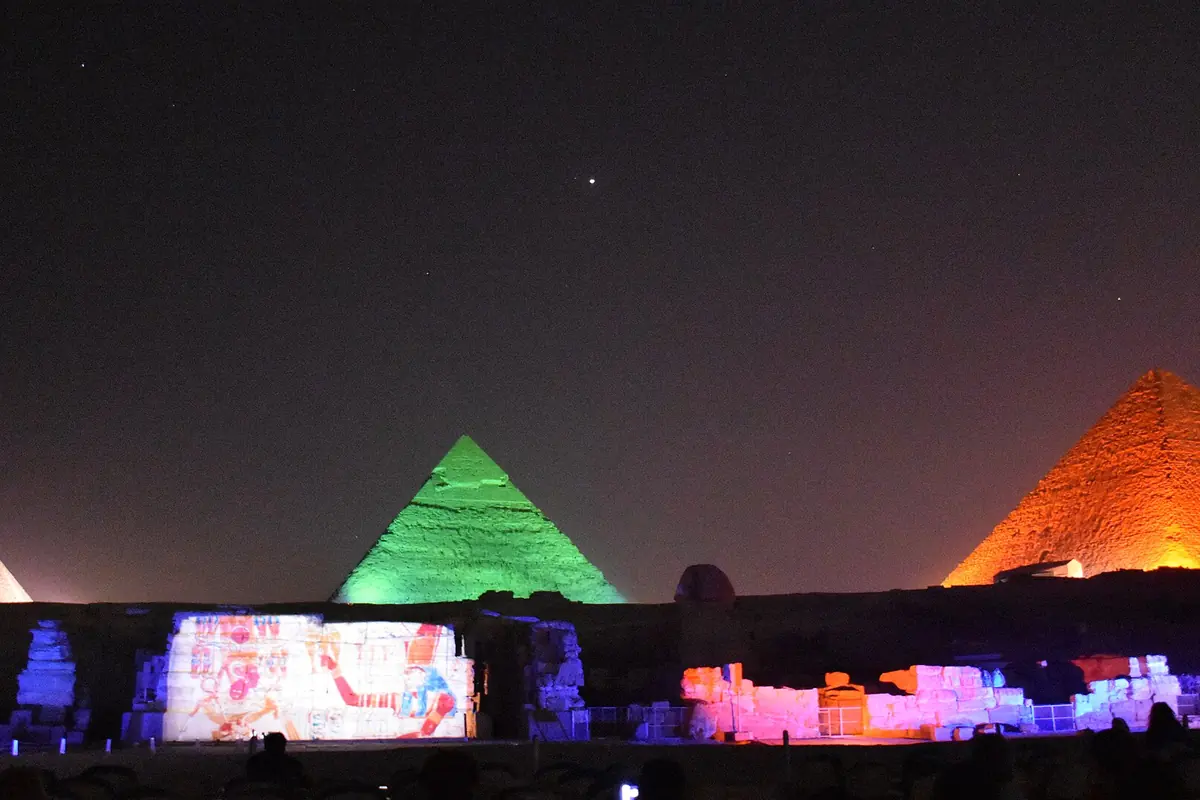
A painting projected on a ruined wall between the pyramids. The format
A French idea carried to the desert
Wikipedia credits the son et lumière concept to Paul Robert-Houdin, curator of the Château de Chambord, where the first such show ran in 1952. It describes the form as a nighttime entertainment, usually outdoors at a place of historic importance, that pairs lighting with recorded narration and music.
-
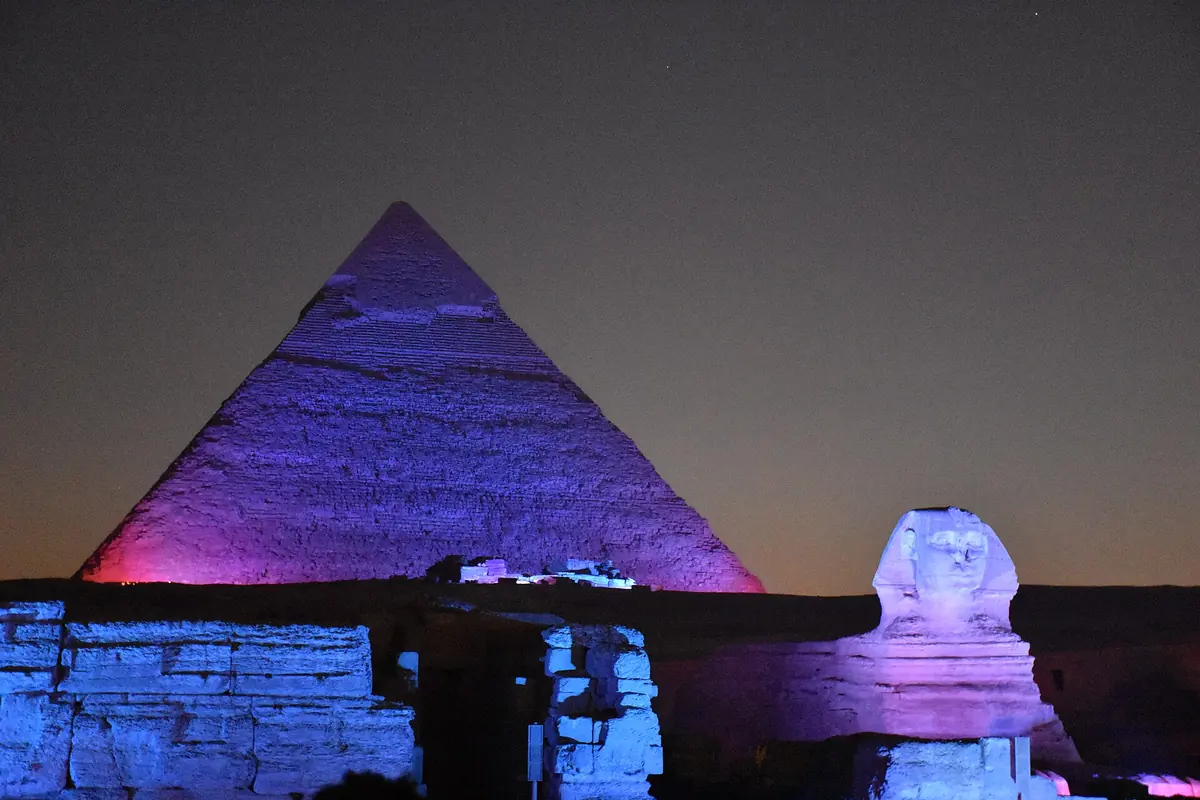
Khafre's pyramid and the Sphinx under colour. The date
Giza joins in 1961
Wikipedia says the first African production of the form was staged at the Pyramids of Giza in 1961. That is the source for this site's claim that a show has been staged at Giza since 1961. The date marks when the tradition began at the site; it does not describe today's production.
-
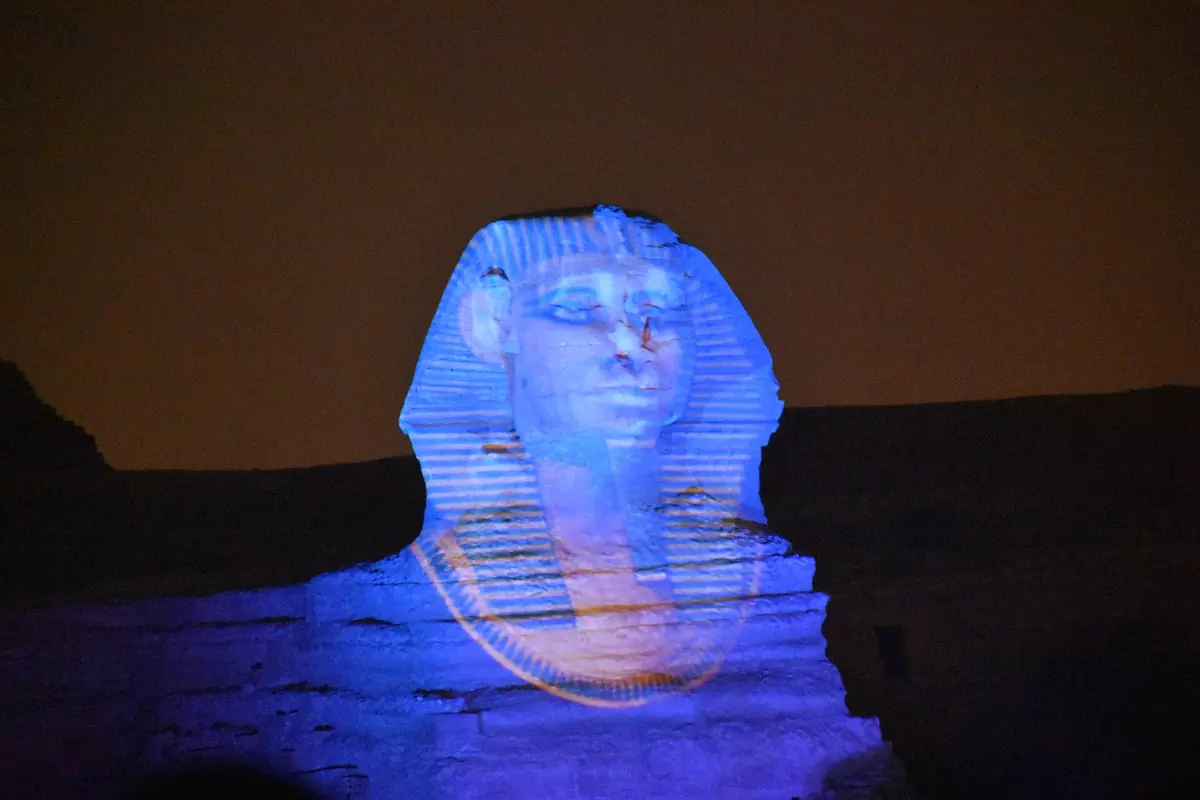
The Sphinx's face in blue light. The Sphinx
A limestone lion with a human head
Wikipedia gives the Great Sphinx as about 73 metres long and 20 metres high, carved from the bedrock of the plateau. Its face is usually linked to Khafre, who reigned around 2558 to 2532 BC, though scholars still dispute the attribution. Its original name is unknown; the New Kingdom called it Hor-em-akhet, Horus of the Horizon.
-
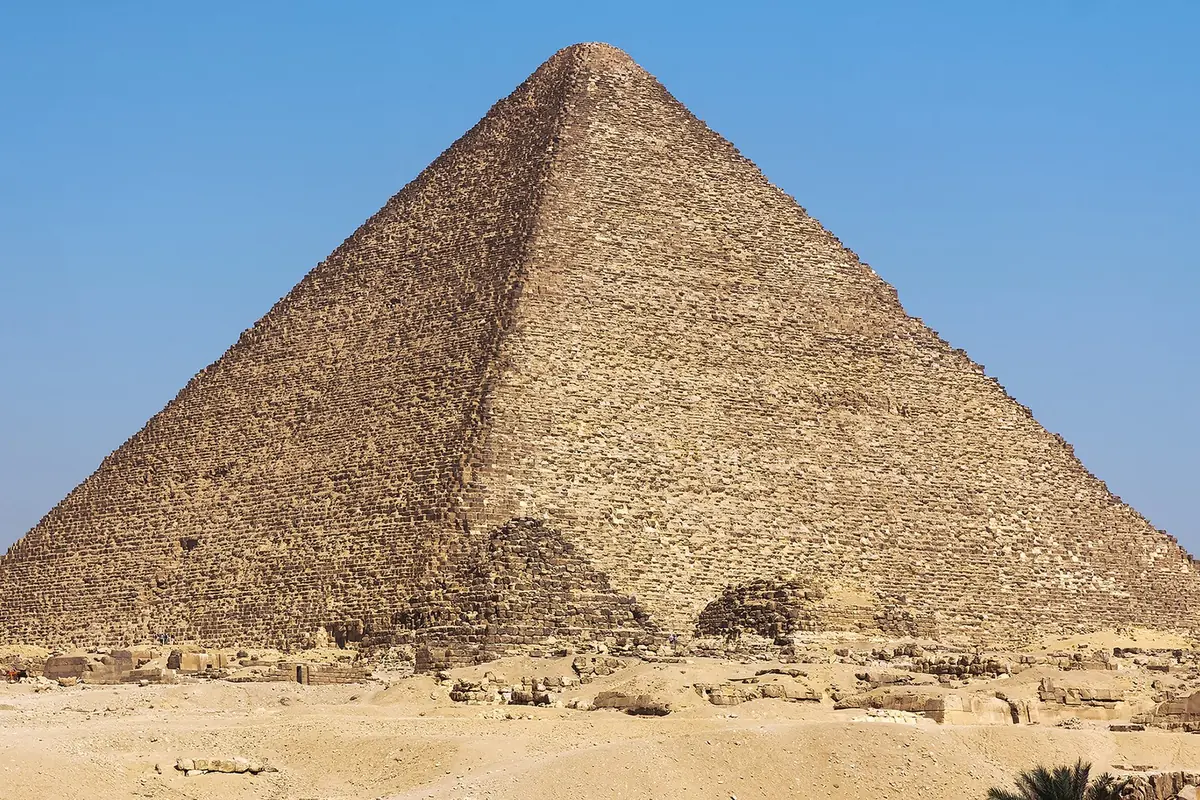
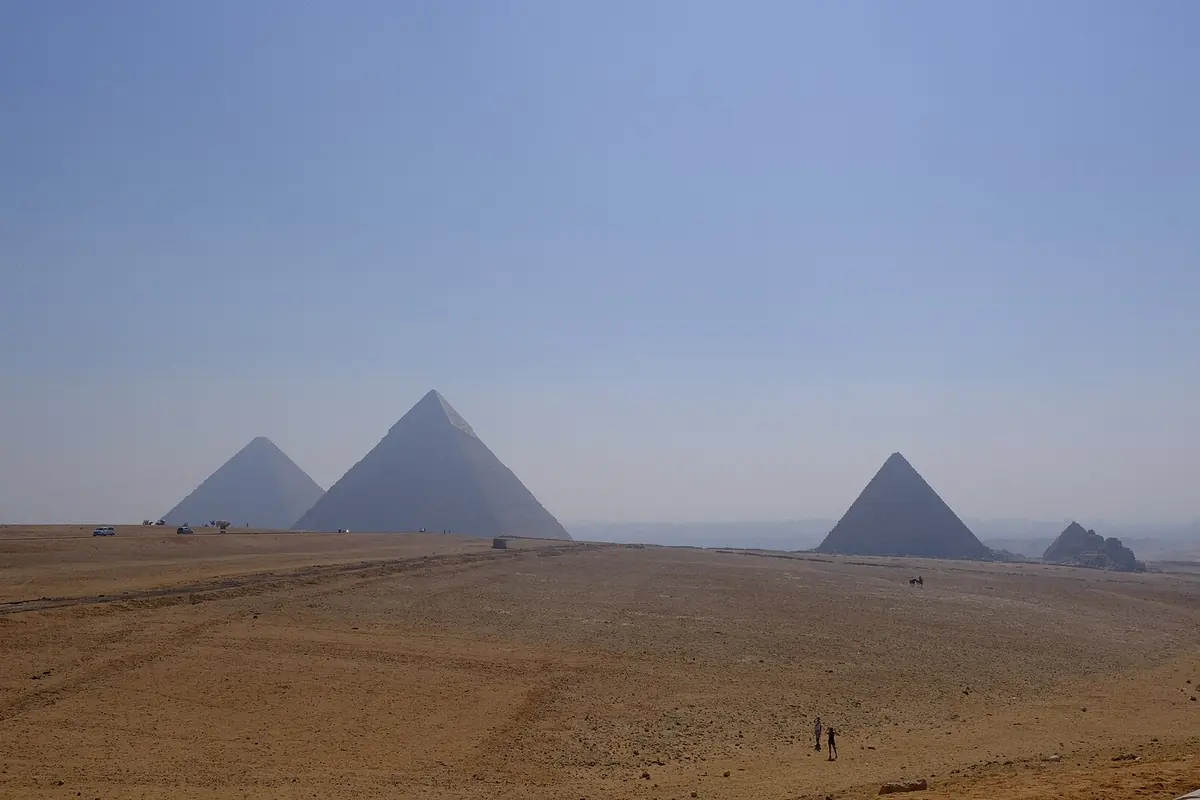
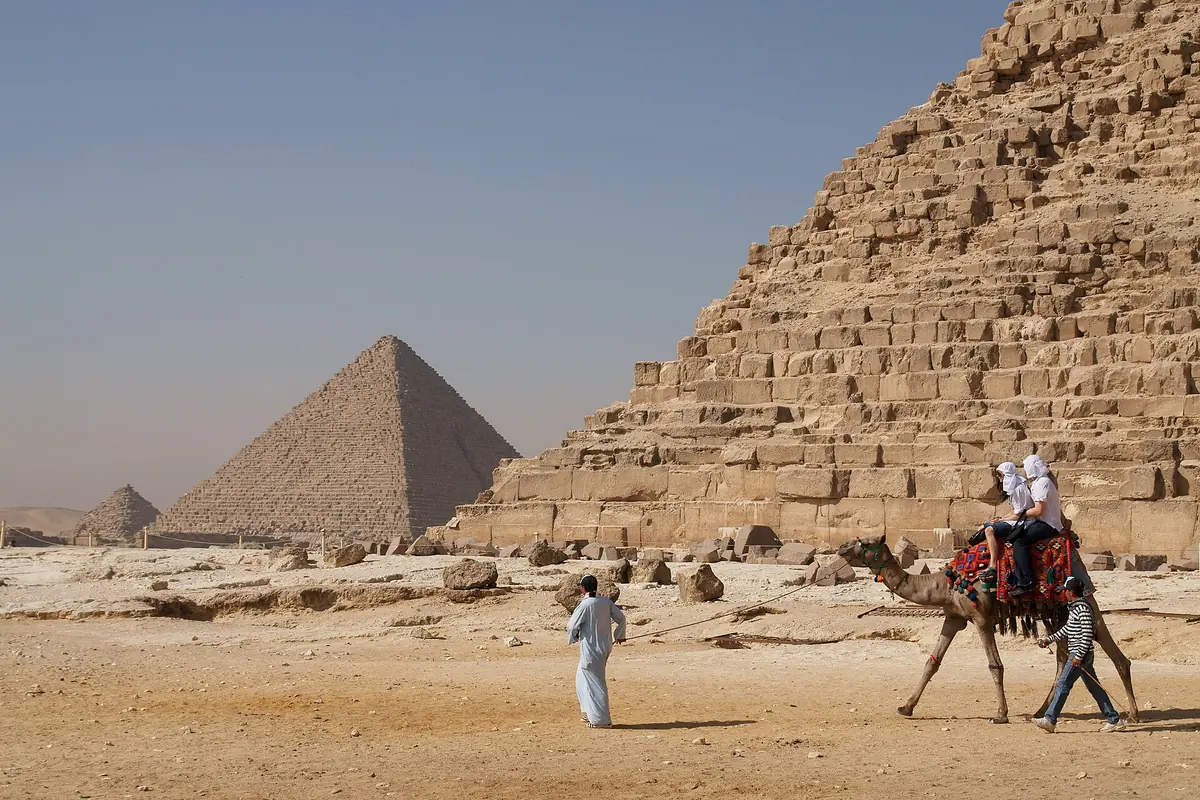
The Great Pyramid by day. Khufu
The Great Pyramid
Wikipedia says the Great Pyramid was built for Khufu around 2600 BC over about 26 years. It stood 146.6 metres tall and now stands at 138.5 metres because its casing was largely removed. The Greeks believed slaves built it; Wikipedia notes that finds at nearby workers' camps point to thousands of conscript labourers.
-
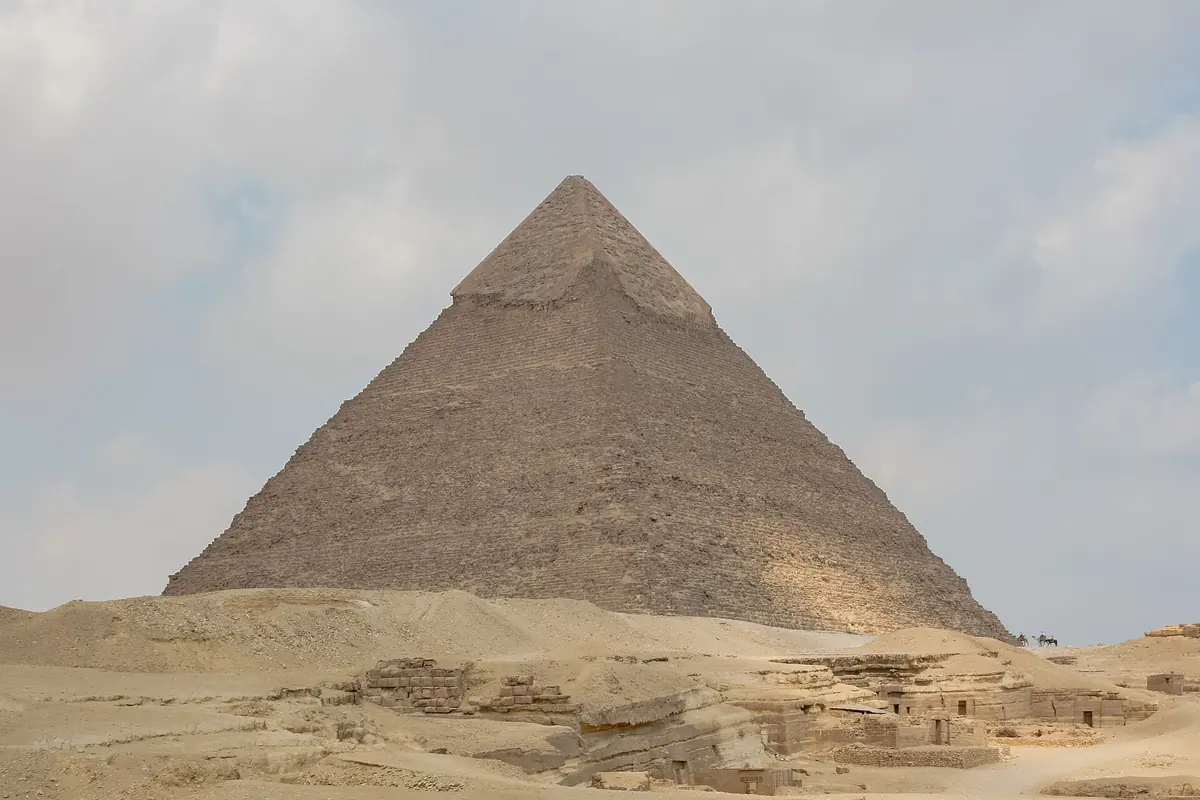
Khafre's pyramid, with casing still near the tip. Khafre
The middle pyramid that looks tallest
Khafre's pyramid is the second largest of the three, yet it appears taller because it stands on bedrock about 10 metres higher, according to Wikipedia. Among the three, only Khafre's pyramid still holds casing stones near its apex, roughly the top third.
-
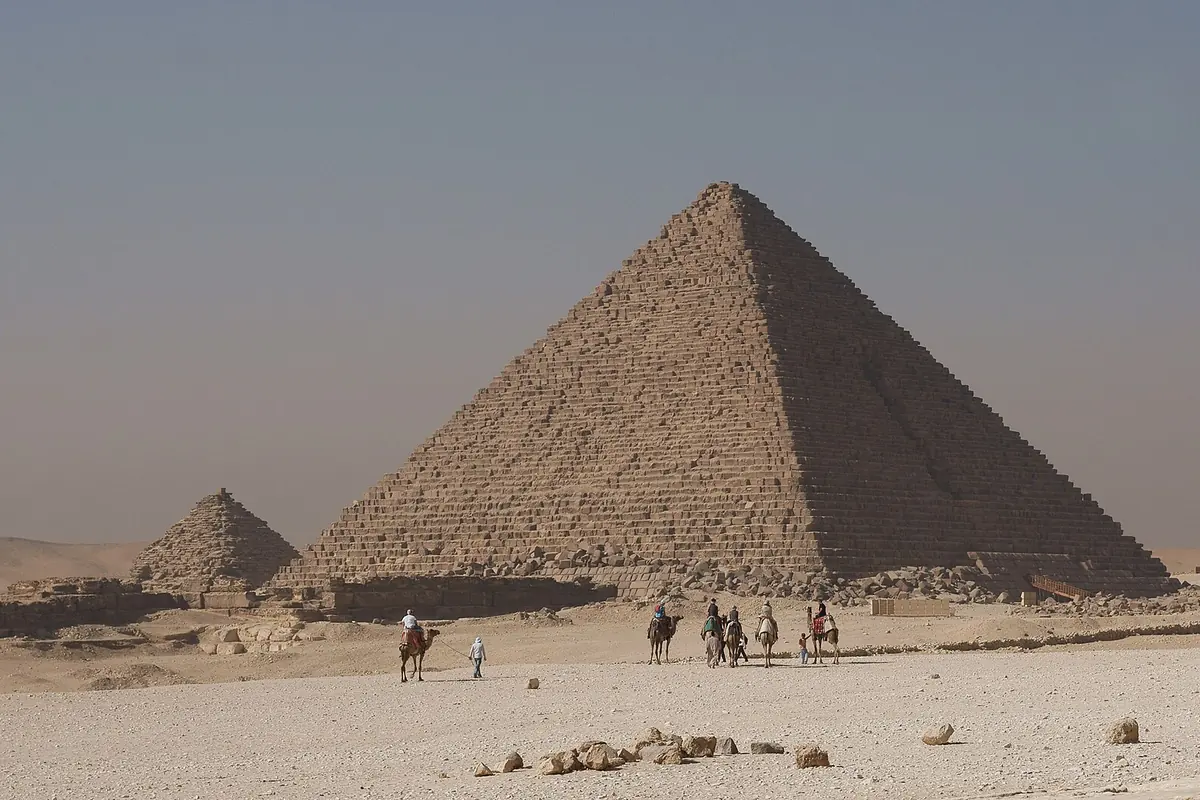
Menkaure's pyramid, the smallest of the three. Menkaure
The small pyramid with granite at its foot
Menkaure's pyramid is the smallest of the three, with roughly a tenth of the volume of Khufu's, says Wikipedia. Its lowest courses were red granite from Aswan, and unfinished work suggests Menkaure died before it was complete, leaving the job to his successor Shepseskaf.
-
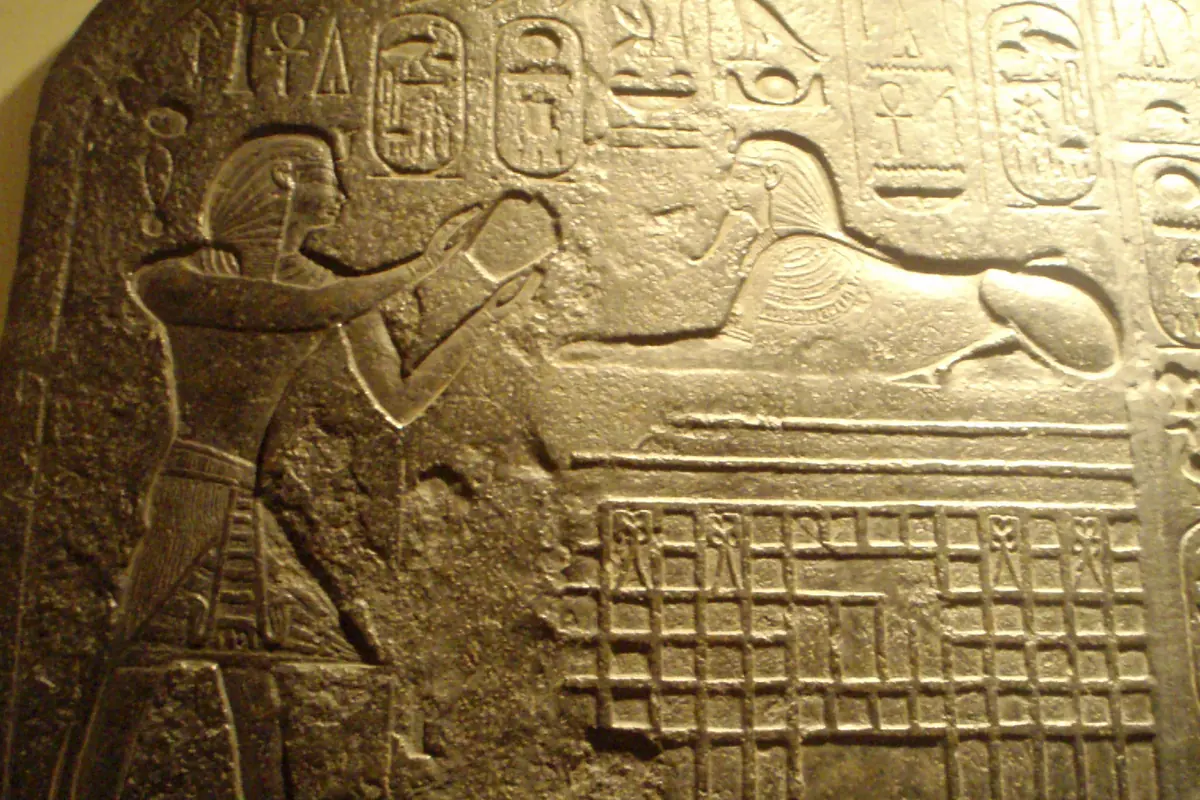
A museum reproduction of the Dream Stele, not the stone at Giza. The stele
The dream between the Sphinx's paws
A granite slab between the Sphinx's paws, the Dream Stele, was set up by Thutmose IV around 1400 BC after he cleared sand from the monument. Its text tells of a dream in which the Sphinx asks to be freed from the sand. Wikipedia adds that the stele's mention of Khafre is damaged, so its link to the monument stays uncertain.
The panels describe the monuments and the format, not the script of any particular evening. The booking page does not publish the script.
What the night borrows from
Four layers a night on the plateau draws on
Reading the booking page
Stated, and not stated, on the booking page
Each line below was lifted from the booking page on 18 November 2026. If your confirmation says something different, follow the confirmation.
See availability ↗The currency follows your choice on GetYourGuide; the total appears at checkout.
- The outing
- The sound and light show at the Giza Pyramids, sold as a private outing of roughly two hours.
- Transport
- Transfers in an air-conditioned vehicle. The page does not describe the meeting point in the lines this guide relies on.
- Entry
- Entry fees are included, and a separate direct entry ticket is delivered to the traveller.
- Guide and water
- A tour guide and a bottle of water travel with you.
- Language
- Narration languages rotate between nights, so read the language shown for your date.
- Not stated
- A running order, a script, seat categories and the exact start time are not set out. Your confirmation carries the time for your night.
Lights, or a table with a view
The sound and light show or a rooftop dinner facing the pyramids: which Giza evening?
Book the show, or pick another Giza plan
Other ways to spend time at Giza
The show fills one evening. Three alternatives sit below it: a rooftop dinner facing the pyramids, a private daytime visit with a camel ride, and a half-day tour of the plateau.
- See availability ↗
Sound and light show with transfers and entry
A two-hour private outing to the plateau for the evening show, with transfers in an air-conditioned vehicle, entry fees, a tour guide and a bottle of water.
- See availability ↗
Dinner with the pyramids around you
A rooftop dinner set against the Giza skyline, booked as its own plan and scored far higher than the show.
- See availability ↗
Private pyramids and Sphinx tour with a camel ride
A daytime private visit to the plateau, the monuments up close and a camel ride added in.
- See availability ↗
Half-day tour of the pyramids and the Sphinx
A shorter daytime trip from Cairo that covers the same three pyramids and the Sphinx in daylight.
More to book around Giza
Before you go
Before you go
Read the language
Narration languages vary by night, so look up the one that applies to your evening.
Dress for open air
You sit outdoors on a desert plateau after dark, so pack a layer and shoes for sand and gravel.
Set the bar
Expect coloured light and narration, not actors or a modern spectacle. The score is low because many visitors expected more.
Check the transfer
Look at your confirmation for the meeting point and the time, since neither is on the lines this guide relies on.
Giza after dark, and the stones behind the lights
Giza after dark, and the stones behind the lights
Wikimedia Commons photographs of the plateau at night and by day. None shows your booking.
Go deeper
Longer reads
- Start here Is the Giza sound and light show worth it, given its reviews? A fair look at an evening that scores 2.8: what the package contains, what reviewers criticise, what they enjoy and who should keep their money for something else. Open guide →
- The comparison The sound and light show or a rooftop dinner facing the pyramids? Two ways to spend a Giza evening set side by side: floodlit monuments from outdoor seats, or a table with the pyramids around you, and the scores that separate them. Open guide →
- Before you pay Who should skip the Giza sound and light show Five kinds of traveller who will probably be happier with a different plan, and the kind who will not mind the low score at all. Open guide →
- The format Son et lumière: from a French château to the Giza plateau Where the sound and light show comes from, how the form works and what a 1961 date at Giza does and does not tell you about tonight's show. Open guide →
- The stones The three pyramids of Giza: who they were built for and who built them Khufu, Khafre and Menkaure and their pyramids: heights, dates and the evidence about the workers, drawn from Wikipedia and UNESCO. Open guide →
- The Sphinx The Great Sphinx of Giza and the story of the Dream Stele What the Sphinx is made of, who it may portray, what the Egyptians called it, and the granite slab between its paws that tells of a dream. Open guide →
FAQ
Questions to settle first
Is the Giza sound and light show worth it with a 2.8 score?
For some travellers, yes. The score is low and the other Giza sound and light listings on the same site sat between 2.9 and 3.2 when checked, so the format itself draws mixed views. It suits anyone who wants the pyramids and Sphinx floodlit at night and accepts an old-fashioned show.
What do reviewers criticise?
Write-ups on travel sites call the production dated, describe narration as generic and say sound can fall short of modern shows. One practical review mentions cancelled bookings and a missing driver. Read recent reviews of this listing for the same themes.
What do reviewers enjoy?
The setting. They praise the pyramids and Sphinx lit in colour at night, narration that covers ancient Egyptian history and, for a private outing, the lack of a crowd.
Is there a performance with actors?
No. The show is coloured light and narration playing across the monuments, a form that began at Chambord in France in 1952 and reached Giza in 1961, according to Wikipedia.
Who should skip it?
Anyone expecting a modern, high-tech production, anyone who dislikes sitting outdoors at night, and anyone who wants to walk up to the stones by day instead. A daytime plateau visit suits that traveller better.
What should I wear?
Seats are outdoors on the plateau after dark. Bring a layer and shoes that cope with sand and gravel.
What does the package include?
A private outing with transfers in an air-conditioned vehicle, entry fees, a tour guide and a bottle of water. A separate direct entry ticket is delivered to the traveller.
Can I go without the package?
In general terms, yes: you would arrange your own transport and your own ticket for the show. The package trades that effort for a bundled outing.
Which language will the narration use?
It varies by night. One travel company's page says the first show each evening is in English and a later show rotates by day. Check the language shown for your date on the booking page.
What is the cancellation term?
GetYourGuide's page for this listing offers free cancellation until 24 hours before the experience begins. Confirm the exact terms there.
Is this guide connected to the show?
No. This is an independent guide. It does not run the show, the plateau or the transfers, and it may receive a small fee when you book through GetYourGuide.