The Sphinx
The Great Sphinx of Giza and the story of the Dream Stele
What the Sphinx is made of, who it may portray, what the Egyptians called it, and the granite slab between its paws that tells of a dream.
Choose my night ↗Quick answer
The Great Sphinx is a limestone figure of a recumbent lion with a human head, carved from the bedrock of the Giza plateau. Wikipedia says it measures about 73 metres long and 20 metres high, probably dates to the reign of Khafre, and was called Hor-em-akhet, Horus of the Horizon, in the New Kingdom.
The Sphinx in numbers
| According to Wikipedia | |
|---|---|
| Length | About 73 m |
| Height | About 20 m |
| Width at the haunches | About 19 m |
| Material | Limestone from the plateau's bedrock |
| Likely date | Reign of Khafre, c. 2558 to 2532 BC; disputed |
| New Kingdom name | Hor-em-akhet, Horus of the Horizon |
A lion carved from the plateau
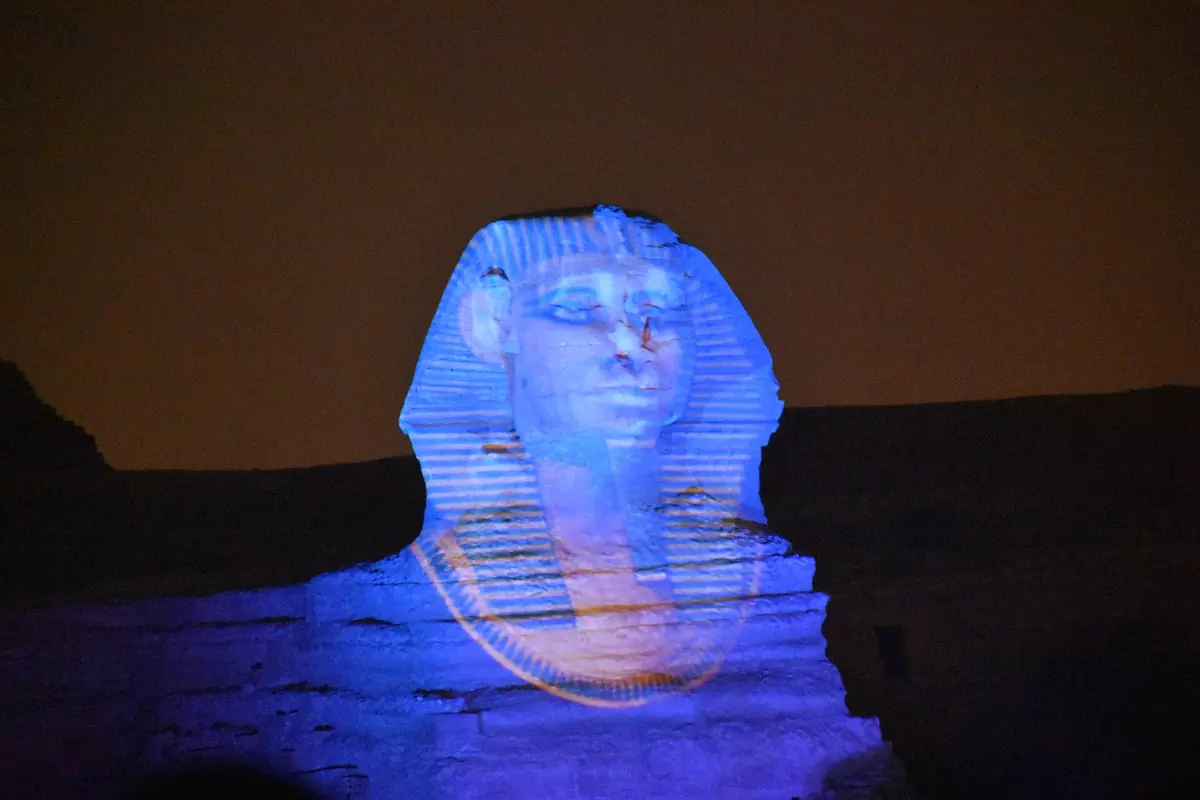
The Great Sphinx is carved from the limestone bedrock of the Giza plateau, not assembled from blocks. Wikipedia gives its size as about 73 metres from paw to tail, 20 metres from base to the top of the head and 19 metres wide at the rear haunches. It depicts a resting sphinx with a lion's body and a human head. Coloured light picks out that head and its headdress clearly in photographs of the evening show.
Whose face is it
Egyptologists generally link the Sphinx to the reign of Khafre, who ruled around 2558 to 2532 BC, and many take the face to be his. Wikipedia is careful on this point: the attribution is still debated, and some scholars suggest Khufu or Djedefre instead. The article also notes that the Sphinx may have been part of Khafre's complex, since it was carved from a rock formation that was also quarried for the blocks of his pyramid.
What the Egyptians called it
The name Sphinx belongs to the Greeks. Wikipedia says it was applied in classical antiquity, about two thousand years after the monument was built, by comparison with a mythological creature of that name. The original Egyptian name is unknown. In the New Kingdom the monument was known as Hor-em-akhet, which means Horus of the Horizon. Those names matter to anyone listening to a narration, because the voice may use any of them.
The Dream Stele
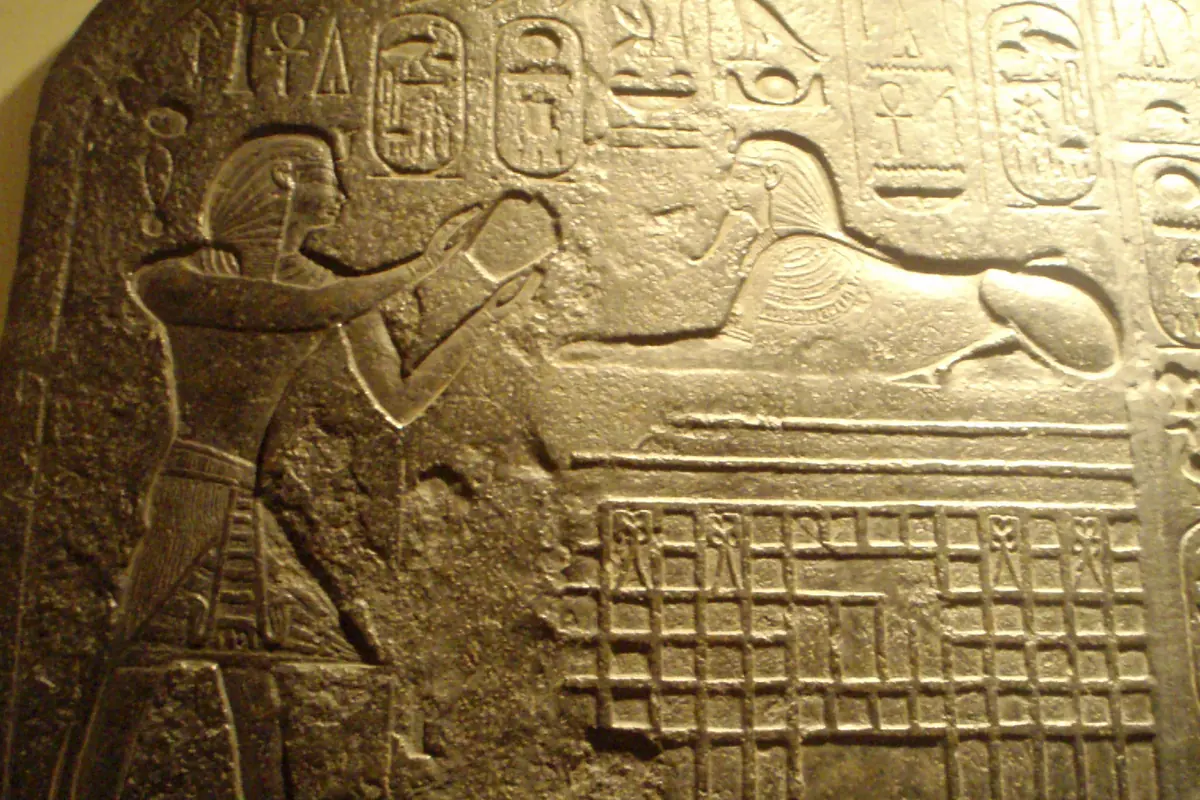
Between the Sphinx's paws stands a granite slab known as the Dream Stele. Wikipedia says Thutmose IV erected it around 1400 BC after he cleared sand from the monument. Its text describes a dream in which the Sphinx asks to be freed from the sand that covers it. The same article warns that the stele's reference to Khafre is partly damaged, so its link to the monument is uncertain. The photograph here shows a museum reproduction, not the stone at Giza.
Why it matters for the evening
The Sphinx is the figure most people hope to see lit, and it is also the one whose story is least settled. Its date, its face and its original name are all open questions in the sources, which is a reason to treat any single confident claim about it, in a narration or anywhere else, with some care. A visit by day lets you look at the carved limestone closely; an evening show lets you see the whole monument in coloured light. The two views complement each other.
Seeing it at night
At a sound and light show the Sphinx is lit in colour, often in the foreground with a pyramid behind it. The booking page does not publish the narration, so this guide cannot say what the voice tells you about the monument. What the monument itself offers is a face, a headdress and a body of bedrock that sand has covered and people have cleared. That history is richer than any show can fit into its running time.
Read next: Is the Giza sound and light show worth it, given its reviews?
Frequently asked questions
How big is the Sphinx?
Wikipedia gives about 73 metres long, 20 metres high and 19 metres wide.
Whose face does it have?
Usually linked to Khafre, but scholars dispute the attribution, per Wikipedia.
What is the Dream Stele?
A granite slab between the Sphinx's paws erected by Thutmose IV around 1400 BC, telling of a dream in which the Sphinx asks to be freed from sand.
Sources